Saturday, March 14, 2015

Is Philae alive?

    For the first time since Philae fell in silent in the last November, Rosetta is trying to make contact with it.

    Philae fell sleep two days after reaching the comet 67P, the cause of this was that Philae ended in a cliff or boulder wall that don't aloud Philae to take as solar energy as it will be needed. But this issue will probably get solved when 67P get nearer to the sun so more sunlight will reach it and because of that more solar energy will receive Philae. Due to this lack of energy Philae turn off all its system except one that prevent that the electrical circuits of Philae get freeze, but Philae is programmed to turn on its system as it receive more solar energy, starting with the system that aloud us to communicate with Philae.

    As I said before the ESA is now trying to contact Philae, they are sending to it some orders to get active if it have enough energy, but by this moment the ESA expect that Philae will be receiving data but it will  not have enough energy to answer the message. However Rosetta will keep trying to make contact until the 20 of March, and by that day Philae don't have make any contact, Rostta will stop
and will keep trying it in March.


Friday, March 13, 2015

University of Tokyo's CanSat in 2002

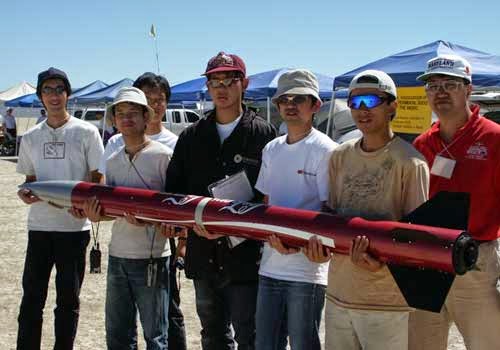
As the Titech (Tokyo Institute of Technology) CanSat in 1999, the University of Tokyo planned and designed their own CanSat in 2001 also as a Japan-U.S. joint venture to make satellites for educational purpose. Their CanSats were designed to deploy a thin flexible membrane using centrifugal force. As it happened in previous editions, the satellites were launched in a rocket called AIRLISS (A Rocket Launch for International Student Satellite). Three different CanSats were built and launched at the Black Rock desert, in Nevada. Each one had a specific mission:

        - CanSat#001 was a prototype of the orbital model of Gekkabijin (a nano satellite which was being designed at that moment by the laboratory of the University). Its missions included rotating CanSats using a reaction wheel, charging secondary batteries by solar cells, estimating attitude using a gyro and solar cells, performing communication and sending telemetry among other things.

        - CanSat#002's main purpose was to test electronics and six sensors. Besides, its structure was made of a usual juice can to reduce its weight.

        - CanSat#003 was equipped with a CCD camera and a high power transmitter which was able to send the taken pictures during the flight to the ground station.

There were some failures in parts such as the antenna, but as an educational project it was a success thanks to the learnt skills by the students.


Rosetta lost contact with Philae

        The sounding line Rosetta of the European Spacial Agency stills without contact with Philae.

        This Thursday, after a few hours, the receptor, which made history months ago landing in a comet and was expected to contact with the unit, was turned on.

        According to the ESA, the operation was performed at 1.00 a.m. and it hasn't received any signal of the unit Philae yet. This unit entered in a state of hibernation, just after setting in the comet 67/P, due to a shortage of energy.

        The line won't be opened until the next friday, but a good communication is not expected. It is more probably to receive a signal from Philae on June or July.

        The comet is now only at 300 millions of kilometres from the Sun, so it's worth to try to contact it. Whenever the comet gets closer to Sun, its temparature will increase. Until Philae does not reach -45ºC, it will be impossible to wake up the unit.

        If it achieves this temperature, Philae will be able to charge its batteries and to turn on the receptors every 30 minutes waiting for a signal from Rosetta. The information that they are going to collect from Philae will treat mostly about unit's state.

        They will have difficulties to succeed, but we will see what happens at the end...

Thursday, March 12, 2015

Why 67P/ Churyumov-Gerasimenko?

      Rosetta's space mission was to follow the asteroid 67P until the spacecraft and the asteroid rendezvous and carry a scientific study of the asteroid. But what is the point of following this specific asteroid?

      To answer that question we must consider some of the most important factors which made the ESA choose this asteroid.

      The main point that was observed was that the asteroids must be near enough so the spacecraft was able to rendezvous with them as soon as posible. At the beginning, 67P was not selected as the target, but, due to some problems with the Ariane 5 (the carrier rocket of Rosetta) the launch was postposed to the next year, so it was impossible for Rosetta to reach 46P/ Wirtanen at time. Due to this, 67P was designated as the main target.

This decision was made because 67P was know for having water vapor, so the objective of the space mission Rosetta was stablished as analyzing that water vapor in order to aloud us to study the difference of "extraterrestrial" water and earth´s water.

Comet 67P on 7 August


Sunday, March 8, 2015

Philae

Philae is an ESA lander that accompanied the Rosseta spacecraft on its mission until it landed on comet 67P more than 10 years after it launched from The Guiana Space Center in French Guiana. It landed on the 12th of November 2014 achieving the first ever soft landing on a comet nucleus, obtaining the first images of a comet´s nucleus.

The spacecraft is tracked, managed and operated from ESOC space center in Germany. It has been the first spacecraft to be able to make a direct analysis of a comet with several instruments, sending back information to be able to determine the composition of the comet´s surface.

It gets its name after the philae obelisk which was used along the rosseta stone to decipher Egyptian hieroglyphics. As of today Philae remains shut off and in safe mode due to not enough sunlight and disorientation after landing in an unplanned site. Because of the little light it receives it is currently incapable of communicating with its sender Rosseta. Mission controllers at ESOC hope that by August this year it will receive enough energy to power up and reconnect with Rosseta.

Philae's scientific goals focus on " elemental, isotopic, molecular and mineralogical composition  of the cometary material, the characterisation of physical properties of the surface and subsurface material, the large-scale structure and the magnetic and plasma environment of the nucleus".

The primary battery was designed to be able to power Philae's instruments fore more or less 60 hours. ESA expected that a secondary battery would be at least partially filled by the numerous solar panels attached to the outside layer of the spacecraft, but the limited sunlight (90 minutes per a 12.4-hour comet day) at the unfortunate, unplanned landing site is inadequate to capture sunlight, at least in this phase of the comet´s orbit. On the morning of the 14th of November 2014 the battery was supposed to last until the end of the day. In order to use as least battery as possible the first data obtained was from instruments whose measurement procedures did not require mechanical movement, being able to get 80% of the initially planned scientific observations. During the "evening session" of that day Philae was raised 4 cm (1.6 inches)and rotated its body 35 degrees to a more favourable position for the largest solar panel of all, to try and capture as most sunlight as possible in the future. This operation of lift up and rotation used up quite a lot of battery, forcing a shut down of all instruments . Contact was lost on 15th of November at 00:36 UTC. The German Aerospace Center's spacecraft manager stated: "Prior to falling silent, the lander was able to transmit all science data gathered during the First science Sequence... This machine performed magnificently under tough conditions, and we can be fully proud of the incredible success Philae has delivered.


Saturday, March 7, 2015

Titech CanSat project in 1999

Prof. Twiggs, from Stanford University proposed the CanSat project at 1998 University Space Systems Symposium in Hawaii. The project was a collaborative effort between U.S. and Japanese universities to develop can's size satellites (CanSat).


Titech (Tokyo Institute of Technology) designed and built some prototypes, exactly four. Their CanSats were launched on an amateur rocket called ARLISS (A Rocket Launched International Student Satellites) on 1999. The launch place was located at the state of Nevada, in the Black Rock desert. Those satellites reached a height of 3657m approximately, which means a low orbit flight. Each CanSat had a specific mission:
     
        - CanSat Type1, called "Spider". Its mission consisted of testing a small reel system for space tether applications

        - CanSat Type2, named "TeS". Its objective was to show that the tethered satellite was able to go up and down along the tether thanks to designed small roll mechanisms.

        - CanSat Type3 whose name was "[etc]". Its was described as a communications and electronic devices test satellite. It carried seven sensors (3 gyros, 2 accelerometer sensors, a temperature sensor and a pressure sensor).

        - CanSat Type4 named "SabSat". Contrary to the rest of the satellites, this one's size was 150ml instead of the usual 350ml. Its mission, transmitting NTSC signal of CCD video in UHF during the descent period.


The launch was conducted on 11th September 1999. Some technical problems happened ("[etc]" and "SabSat" were tethered in the rocket). However, it should be considered as a brilliant project for being pioneer in the CanSat field.
                                                                                                         

Thursday, March 5, 2015

How is divided the comet 67P

Rosetta orbits around the comet 67P also called Churyumov-Gerasimenko due to the astronomers Klim Ivanovych Churyumov and Svetlana Ivanova Gerasimenko. This comet have a shape which looks like two spheres, one bigger than the other, and a link between them. The ESA had separated this comet into 19 different regions as is shown in the photo below. This regions where named using the names of different gods of the ancient Egypt, this is because the Rosetta stone most important use was to make us able to understand the hieroglyphs that were used in the times of pharaohs.

Map of comet 67P divided in 19 regions
© European space agency