Sunday, March 22, 2015

Rossetta's comet is spinning down

Comet 67P as observed by Rosetta is very gradually spinning down. It takes 12.4 hours to complete one rotation but scientists have observed that this is extending by one second a day, in other words the comet is getting more active. In September last year, it was determined that the rotation period was extending by 33 milliseconds per day. Now withe comet moving closer to the sun and expelling a much larger amount of gas, this spin-down effect is increasing.

As the comet warms up its ice vaporises and throws jets of gas and dust. These gases expelled are acting like thrusters for the comet by slowing it down as said by flight director Andrea Accomazzo, who has been describing how his team has learnt to fly Rosetta around the comet with remarkable precision, at the Royal Aeronautical Society in London this week.

But how do navigators understand the comet's rotation?
By using a system of landmarks on the 67P being able to see and measure its rotation and trajectory, and sending this information to a model that helps plan the trajectory of the satellite.

During December and January, Rosetta was able to move within 30 km of Comet 67P and go into a gravitationally bound orbit. This is no longer possible and Rosetta has retreated. According to the ESA flight director "The aerodynamic effects are getting more and more important. The jets are getting stronger and stronger. To give you an idea, these gases come out of the comet for a few km and are moving at 800 metres per second. We definitely have to take this into account. We are a big spacecraft with 64 square meters of solar panels. We are like a big sail."

However ESA's is currently planning some closer flybys to try and discover Rosetta's lost landing probe, Philae.

Tuesday, March 17, 2015

The Rendezvous

          The most difficult part in the mission of Rosetta was the rendezvous with the comet being in movement. This action had many complications, as the high velocity of the comet or breaking any piece of the unit on the landing.
          When the unit was reactivated, the thrusters fired for many hours until the velocity was reduced to 25 m/s. From this moment, the drift was increasingly descending and after 90 days the velocity was of 2 m/s.
          Before the arrival, Rosetta had taken pictures of the comet and made calculations to make possible the touchdown, this made possible the success, Rosetta started sending pictures of the 67/P, with very precise information and being able to look for landing sites, there were five possible.
          Eventually, the spacecraft was inserted into orbit around the nucleus at a distance of about 25 km.
          Finally on november 2014 the rendezvous was possible. After it was chosed a suitable landing site , the lander was released from a height of about 1 km, this action took place at walking speed.
          Rosetta will continue sending data to the earth, until this december it will pass close to the Earth, more than 4000 days afther the mission began.


Monday, March 16, 2015

Other ESA's missions

Cluster Mission

The Cluster mission is a non-tripulated mission that studies the magnetosphere over the course of an entire solar cycle. The mission is composed of four identical spacecrafts flying in a tetrahedral formation. A replacement for the original Cluster spacecraft which was lost in a launch failure in 1996, was the four Cluster II spacecrafts which were successfully launched in pairs in July and August 200,onboard two rockets. In february 2011, Cluster II celebrated 10 years of successful scientific operations in space. The mission has been extended until December 2016.

Double Star Mission

Double star was a joint Chinese-European mission directed by ESA and the Chinese space agency (CNSA) also with the objective of studying the magnetosphere complementing Cluster. It was proposed in 1997 and the 1st of July of 2001 they signed an agreement on the mission.

The mission consisted of two satellites. They were both designed, developed and launched by the China Space Administration, flying in different orbits around the earth. The ESA built 8 measuring instruments onboard of each satellite, seven of which were instruments meant to be used in the cluster mission.


Envisat (environmental satellite) Mission
Envisat is an inoperative Earth-observing satellite still in orbit. It was launched on March 1, 2002 aboard an Ariane 5. It is at an altitude of 790 km being in a Sun synchronous polar orbit. It orbits the earth in about 101 minutes with a repeat cycle of 35 days. After loosing contact with the satellite on April 8, 2012, ESA formally announced the end of Envisat's mission on the 9th of May 2012. Envisat is the largest civilian Earth observation satellite put into space.


Sunday, March 15, 2015

MMS spacecraft launched Thursday night

       Three nights ago, the Magnetospheric Multiscale (MMS) was lauched. Not just another spacecraft: it will lead to the Earth magnetic field's full understanding.

       MMS consists of four identical spacecraft that will orbit around Earth through the dynamic magnetic system surrounding our planet to study a little-understood phenomenon called magnetic reconnection.

This mission will provide the first three-dimensional view of magnetic reconnection in the Earth to the Sun, a process that will help to understand how are the magnetic fields in the universe connected and disconnected. Scientists hope to obtain data of the structure and dynamics of the energy exchange magnetic fields when found, at which an explosive release of energy is produced.


       The four spacecraft, equipped with high-precision sensors, simultaneously fly in formation, at a distance of about 10 km from each other, so that the combination of this data allows to have a three-dimensional view.

       The MMS mission will use the Earth's magnetosphere as a laboratory to study magnetic reconnection addition, two other fundamental processes such as acceleration of energetic particles and turbulence.

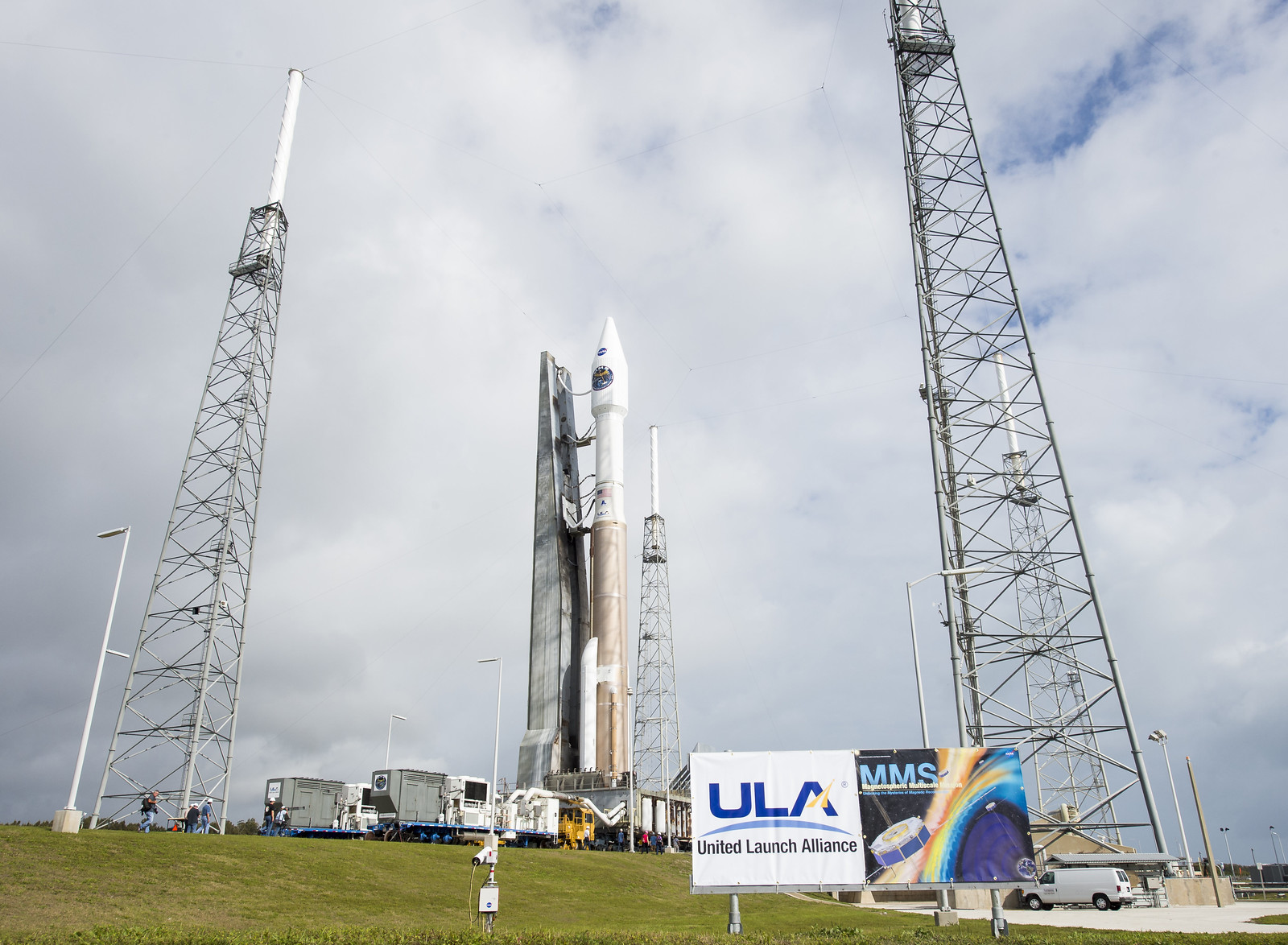
       The launch was the 53rd for the Atlas V and marked the completion of about six years of rocket selection, manufacturing and integration ahead of the launch preparation for the MMS and NASA's Launch Services Program teams along with United Launch Alliance.
The MMS a day before its launch, which took place through 
an Atlas V 421 rocket from the SLC-41 ramp of Cape Canaveral Air Base.

Saturday, March 14, 2015

Is Philae alive?

    For the first time since Philae fell in silent in the last November, Rosetta is trying to make contact with it.

    Philae fell sleep two days after reaching the comet 67P, the cause of this was that Philae ended in a cliff or boulder wall that don't aloud Philae to take as solar energy as it will be needed. But this issue will probably get solved when 67P get nearer to the sun so more sunlight will reach it and because of that more solar energy will receive Philae. Due to this lack of energy Philae turn off all its system except one that prevent that the electrical circuits of Philae get freeze, but Philae is programmed to turn on its system as it receive more solar energy, starting with the system that aloud us to communicate with Philae.

    As I said before the ESA is now trying to contact Philae, they are sending to it some orders to get active if it have enough energy, but by this moment the ESA expect that Philae will be receiving data but it will  not have enough energy to answer the message. However Rosetta will keep trying to make contact until the 20 of March, and by that day Philae don't have make any contact, Rostta will stop
and will keep trying it in March.


Friday, March 13, 2015

University of Tokyo's CanSat in 2002

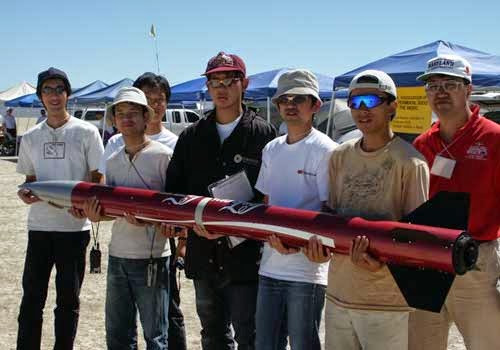
As the Titech (Tokyo Institute of Technology) CanSat in 1999, the University of Tokyo planned and designed their own CanSat in 2001 also as a Japan-U.S. joint venture to make satellites for educational purpose. Their CanSats were designed to deploy a thin flexible membrane using centrifugal force. As it happened in previous editions, the satellites were launched in a rocket called AIRLISS (A Rocket Launch for International Student Satellite). Three different CanSats were built and launched at the Black Rock desert, in Nevada. Each one had a specific mission:

        - CanSat#001 was a prototype of the orbital model of Gekkabijin (a nano satellite which was being designed at that moment by the laboratory of the University). Its missions included rotating CanSats using a reaction wheel, charging secondary batteries by solar cells, estimating attitude using a gyro and solar cells, performing communication and sending telemetry among other things.

        - CanSat#002's main purpose was to test electronics and six sensors. Besides, its structure was made of a usual juice can to reduce its weight.

        - CanSat#003 was equipped with a CCD camera and a high power transmitter which was able to send the taken pictures during the flight to the ground station.

There were some failures in parts such as the antenna, but as an educational project it was a success thanks to the learnt skills by the students.


Rosetta lost contact with Philae

        The sounding line Rosetta of the European Spacial Agency stills without contact with Philae.

        This Thursday, after a few hours, the receptor, which made history months ago landing in a comet and was expected to contact with the unit, was turned on.

        According to the ESA, the operation was performed at 1.00 a.m. and it hasn't received any signal of the unit Philae yet. This unit entered in a state of hibernation, just after setting in the comet 67/P, due to a shortage of energy.

        The line won't be opened until the next friday, but a good communication is not expected. It is more probably to receive a signal from Philae on June or July.

        The comet is now only at 300 millions of kilometres from the Sun, so it's worth to try to contact it. Whenever the comet gets closer to Sun, its temparature will increase. Until Philae does not reach -45ºC, it will be impossible to wake up the unit.

        If it achieves this temperature, Philae will be able to charge its batteries and to turn on the receptors every 30 minutes waiting for a signal from Rosetta. The information that they are going to collect from Philae will treat mostly about unit's state.

        They will have difficulties to succeed, but we will see what happens at the end...